Monday, July 20, 2009

Miles Up The Road


    Three days before Apollo 11 landed on the moon, me and three friends were riding an east bound freight train along the northern shore of Lake Superior.  It was the summer before our senior year in high school and we were on the great adventure of our lives: a hitch-hiking journey across Canada. We were intent on watching the moon landing and had boarded this train with some trepidation, knowing that there was no assurance that we would be anywhere near a TV when that moment arrived.

    The train traversed total wilderness, and without roads and cities as a reference our maps were useless.  There was no way to deduce how far we’d come or when we’d arrive somewhere…anywhere.  Our berth was a box car, sticky with a residue of creosote.  The train’s relentless bouncing and racket was punctuated at unpredictable intervals with stops beginning for no apparent reason, sometimes for lasting for hours, and then, just as inexplicably, ending.  Sleep was impossible and the days blurred.

    The day before the moon landing we were bone sore and down to our last can of beans.  No disembarkment point was in sight and we despaired of being able to watch the moon landing.  Then our luck changed. The unchanging terrain which we had gazed upon for days shifted radically from coniferous forest, to desolation; barren and rocky hills.  Stranger than fiction, the landscape seemed to become moon-like.   We pulled into a railroad yard in the mining town of Sudbury, Ontario, the nickel capital of the world.

    We climbed off the train and hiked out of the railroad yard, dazed with exhaustion but exhilarated by the certainty that soon we would be in a motel and in front of a television.  The motel owners of Sudbury however, had other plans.  The owners of the first two motels we came to took one look at our blackened, bedraggled faces and turned us away.  The possibility loomed that we had come this far and might still miss the landing.  There was no time to rely on the fickle gods of hitch-hiking so we ran down the road, desperately scanning the horizon for the next blinking MOTEL sign.  Finally, just as the sun was setting, we found a room. 

     In the hours preceding the landing, we took showers, drank strawberry milkshakes and took naps in shifts. Crowded onto two beds in front of the television we exulted. At that moment, even though we were still miles from the Atlantic, our trip across Canada, planned for months and dreamed of for even longer, seemed to come to fruition.  Our personal celebration mingled easily and naturally with our celebration of mankind’s giant leap.

    The next morning we hitch-hiked out of Sudbury and a few weeks later arrived in NYC where we attended the ticker tape parade for the astronauts.  There was a distinct feeling of familiarity seeing them in that parade; like encountering somebody we’d met before, miles up the road.

Wednesday, June 24, 2009

A Line At Dawn

5:00 am
Telluride, Town Park

I'm half asleep, disorganized and rummaging blind at the outer margins of the tent, trying not to wake Sharon. Everything I touch seems to be some variation on a pile of clothing, some piles damper than others. I finally manage to find pants and a sweat shirt and lumber out of the broken zippered tent flap, ragged and shivering. All last night I'd faded in and out of sleep, subliminally aware of the steady miniature thumping of a string band mingled with the gurglings of the San Miguel River. It was a muted sound, battened by the starry night and grounded by the alpine forest floor.   At intervals an eerie "whooooo" had risen from the faithful in tireless reverie.  I had surmised that the music I was hearing was coming from somewhere in Town Park. Now, walking by the community shower house with sleeping bag and folding chair in hand, I see where the jam had taken place. The musicians are gone, but you can still feel the heat of their shredding emanating from the spot where they'd stood, like campfire coals still not entirely extinguished. I tip my hat to youth and sleepily trudge on.

Each morning of the Telluride Bluegrass Festival a line forms, beginning on the corner of the family camping area and coiling around a sandy volleyball court.  It would be easy to walk past it in its somnolence; none of the hubbub usually associated with a line of eager concert goers applies at this hour. It consists exclusively of Town Park campers like myself, waiting for a numbered ticket which will grant us priority access to the ritual stage rush which happens  several hours later in the main stage area.  At its head are a phalanx of the hard core, equipped with cots and lying motionless under piles of down; they've been here since last night. Further down the queue are the slightly less fanatic sitters, in folding chairs, legs stretched, semi-conscious, covered with coats and blankets. Five thirty in the morning would seem to constitute early arrival, but in fact, its late. I'm guessing our draw will be in the 100's and they only go up as far as 200. I'm groggily aware that my brother Brad is already in line a few spots ahead of me. I attempt to start a conversation with him, but my voice is husky with sleep and it makes unspoken sense to just sit quietly for a while.

I unfold my beach chair and settle in, pulling my sleeping bag up under my chin. These first quiet moments of waiting would seem to be an ideal opportunity for the mind to wander, but in fact all thought is stilled.  You can't make time slow down, but at this hour you don't need to. My eyes close for a few seconds, a glancing doze, but when I open them I can track those seconds on a continuum of gaining light. Our motley line is pulling gradually into focus and is ennobled as it gains the context of the San Juan Mountain canyon that cradles Telluride. The sunlight, though still too weak to tease the lighter green aspen from the darker pine, is just now able to articulate the border between reddish rock cliffs and brightening sky off to the east. Bridal Veil Falls fades in, tracing a white line down the eastern end of the canyon. Fingers of warmth begin to knead the thin air. A whoosh of color settles from above. Blood begins to circulate.

Someone next to Brad has committed the cardinal sin of setting up an empty chair, under cover of darkness, as a place holder for it's occupant who hasn't yet arrived. We're not the only ones who have noticed this breach in etiquette and there is a general affective rumble of disapproval, although no one says a word. Yesterday morning at about this time a guy who looked like he might be in charge of something had showed up at the head of the line and loudly offered up swigs from his one third empty gallon of Jack Daniels and 30 bagels cut in half and loaded up with cream cheese. I had approached him and tried to strike up a conversation about line etiquette, but quickly realized that he may have been personally responsible for the missing third of Jack. Recognizing my need for a more substantial foothold in coherence, I steered the conversation to more general topics and then rappelled back to my place in line, taking a bagel with me.  A few minutes later the empty chair has been cast into the out-of-bounds area of the volley ball court and the line mends itself at the gap as if it had never broken.

Now without announcement, a man appears at the head of the line with a sheaf of laminated numbers.  He hands them to those standing and sprinkles them down onto the sleeping bags of the not-yet-risen. On contact with each coveted ticket, the line dissolves into the now indisputable morning.  Its too late to go back to bed so Brad and I decide to walk into town to get coffee.  It will be three hours until the next phase of this ritual of claiming turf:The Running Of The Tarps.  

Sunday, March 1, 2009

Closely Held Currents

They're taking my ex-father-in-law from Florida to New York today to place him in hospice care. I have missed him and will miss him. He treated me with respect and seemed to like me, but after the split there was a percipitous end of contact, and no good bye. I sent him a card on the following Pesach and thanked him for his generosity through out our marriage, intuitively staying away from any explicit reference to the divorce. I was told that he had read the card and later handed it back to my ex wife without comment. I guess I've fallen off the edge of the earth.

I'll remember him for the fact that he taught me something about a piece of Jewish life. As I had developed my own perspectives on Judaism, I was occasionally surprised and even disappointed at how lacking in "understanding" his religious practice seemed. The imperatives of the faith framed his life, and beyond that, there seemed to be nothing more to say. I know that in some homes great theological and ethical debates may have carried the day, but in his family, the practices were as straight forward and uncommented on as a fork and a knife. I was typical of the enthusiastic novice, striving for intellectual understanding and stopped cold when confronted with an unvarnished immutable fact. The bottom line was that he always showed up; without fanfare, without comment. He never failed to light a yartzheit candle, he always fasted on Yom Kippur, and at Passover seders he always sat at the head of the table and always passed the horse radish.

He was equally steadfast in the practice of his day to day rituals: catching the same train into work each morning; going to the Y on Sunday to play racket ball and schvitz with old friends; driving to the corner store to pick up the Sunday Times; working on tax returns in his home office with just pencil, typewriter and an antiquated adding machine; watching British comedy shows on public television. He loved to attend cultural events and was commited to keeping an eye open for something new and different to do. I remember going with him to a concert featuring the songs of Yip Harburg. In the last years of his life he traveled alone to Israel, over family objections, to spend a month doing laundry as part of a volunteer adjunct of the Israeli army.

He would frequently take me aside to tell me a story. It was never a story from his distant past, but rather a recalling of a conversation he'd had recently with a friend or business associate or "the young lady in my office who manages the billing". It always began with that person being initially taken aback by a confusing remark he'd made; a non-sequiter spoken at a cash register or a counter intuitive directive in the accounting office.  Then he'd let the texture of their perplexity simmer, lingering on their uncertainity as to whether he was playing with them or was losing his faculties. Taking his time, he'd then tell how he had guided them through their bewilderment, wringing every last drop out of the journey.  And finally, with just a few words, he'd offer a subtle but critical shift in perspective and thereby deliver them to clarity and an understanding of what he's meant. But that epiphany never seemed to be the ultimate point of the story, rather it was his listener's laugh. The final cadence was always, "and he laaaughed!" I can still hear him, leaning on that word, cracking himself up with delight at the memory. I'd like to think that in sharing this with me, he'd brought me, in some small way, into a circle which stretched back to Eastern Europe and beyond, swirling through Jewish life, from Talmudic studies, to Catskills stand-up, to nuclear physics. But I'm sure he would have none of that.

They're taking him from Florida today, where you can go blind in the condo parking lots from the reflected sun light glare off late model Honda's and Volvo's. Away from early bird specials, and bingo, and concerts in Palm Beach. Away from his condominium with it's glass table tops and untouchable living room furniture; its screened porch looking down two stories onto the lagoon where I once tantalized Anna with the possibility that we'd see an alligator sunning on the tuberous Florida grass.

I've fallen off the edge of the earth, but in some sense have always stood outside the place in his family where the most closely held currents churned. But still, I have missed him and will miss him.

Sunday, February 22, 2009

Tribulus Terrestris

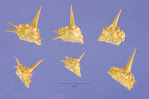
Correct me if I'm wrong Southern California readers, but bull thorns seem to have all but vanished from the motherland.  About ten years ago I was telling Anna about them and in doing so rekindled my own fascination with this, the most vicious and elegant of thorns.  Besides being a great image for a song, they are emblematic of my youth, way out yonder on the frontier of suburbia.   Because these thorns, born of low growing weeds with deceptively pretty yellow flowers, mostly thrive in the dry ground characteristic of yet-to-be-landscaped yards or vacant lots, I suspect that many of my home town peers who lived in more established parts of town where there were fewer such spaces might not share my visceral association with them. 

     If your bicycle rode over one, you had a flat tire my friend.  If you stepped on one, you were screwed.  They caused a pain which was uniquely intense.  Their puncture was always clean and deep, a pinpoint of blood often all that marked the thorn's ground zero.  There was none of this namby pamby "ouch, I stepped on a thorn".  No no no.  The victim of a bullthorn hit went down like a crack whore.  Sometimes there were tears.  All barefoot walkers (with the exception of leather footed Gary Jordan) were vulnerable, because although these thorn may have originated in an uninhabited lot, they had a way of migrating far and wide, and then waiting with the patience of a predator.  They were multi pronged and virtually indestructible.  The weed could only be safely disposed of by sliding a shovel under it's sole center root, decapitating it, then delicately grasping the middle of the plant and carefully lifting its circular thorny lace, beaded with the still green toritos, as a magician lifts a silk scarf, and placing it in a trash barrel.   

     But they were so cool looking, like long horned steer.  Their aura was redolent with the sound of my father's voice, hounding my brother and I go outside on a perfectly good Saturday morning and "knock down some weeds".  Calling to mind table tennis games in the back yard the players seemingly safe from harm, until a back hand lunge rendered one vulnerable and suddenly stricken.  They evoked memories of sandals packed so solid with embedded thorns that you could tap dance in them.  Now, decades later, they stand as a totem of life in a hometown which hadn't yet been completely stripped of wildness.  

     I resolved that on my next trip to California I would find a bull thorn and bring it back to New England to show Anna.  But to my disappointment, the next time I was out west I was unable to find one.  I drove out to what had been the edge of the new housing developments in search of some vacant bull thorn space.  The first red flag that things had changed was that I had a hard time finding an edge. "The outskirts of town" had become "the old part of town", thoroughly landscaped and emptied of bull thorn potential.  I returned to Massachusetts without a thorn. 

     I Wiki-ed the subject and came up with the following: Bull Thorns, formally known a Tribulus Terrestris, came to California in the early 20th century from Eurasia or Africa, probably attached to the wool of sheep.  The fruit of the "puncture vine" also known Torito, (little bull), when ground into a powder and ingested, is known to act as a preventative for high cholesterol.  They are also thought to stimulate testosterone production and were used by the 1988 Bulgarian Olympic wrestling team to increase muscle mass.  In Indian the powder is known as an aphrodisiac.  

     This was all interesting, but the fact that I found most intriguing stemmed from another moniker for the thorn: the caltrop.  A caltrop is essentially a landmine, an ancient anti-personnel weapon made of two or more sharp nails or spikes arranged in such a manner that one of them  is always facing up, usually in the shape of a tetrahedron (tribulus).  Elegant and brutal in their simplicity they have been used for millenia as an impediment to advancing armies, be they elephants, horses or soldiers.  

     During my teen age years the landscape of my neighborhood teemed with these hazards, booby traps thrown down by mother nature in doomed defiance of a tsunami of suburban sprawl on whose foamy edge my adolescence unfolded.  At the same time that American soldiers were being maimed by poison tipped caltrops planted by the Viet Cong, another war was being waged in my own backyard.  The zeitgeist of that era had all eyes focused on Southeast Asia.  Few seemed to notice that in Southern California, developers were going quietly about the business of squeezing the life out of what was, at least in its downtown quadrant, a history minded town.  The incongruous carpet of vibrant green which bloomed in the hills after winter's first rains was just fresh blood to the sharks of subdivision.  The places where as kids we could go and see that even in the man handled sterility of suburbia there was a natural world, were systematically gutted, buried under instant communities, and irrigated with pirated water.  Voices calling for preservation, which had at another point in history compelled developers to respect a line in the sand short of desiccating other wild places like the Sierra Nevada mountains or the Anza Borrego desert, did not seem to exist in my home town.  

     Now, whenever I visit Riverside I make a point of taking a ride out the avenue to the nooks and crannies of the town which only insiders know still exist, places where knots of palm and eucalyptus hold sway and a few rows of orange trees still stand.  I'm nourished by the natural beauty which has somehow survived there, and every once in a while I'll catch a glimpse of a yellow flower in an open lot and remember Tribulus Terrestris.

Sunday, February 8, 2009

The Age Of Obama

My impulse to write often seems to arise in connection with the cold.  Looking back, I've realized that a disproportionate number of these blog entries are ruminations on ice and snow.  This is puzzling to me, not that frigid winter and its corollaries aren’t a worthwhile subject, but that sometimes I feel chained to their inspirational tug. 

In thinking on this I was drawn to memories of a trip I took during the summer before my senior year in high school.  Me and three friends hitch hiked and hopped freight trains across Canada; Vancouver to Montreal.  It was an odyssey rich in subplots and adventures.  So when I serendipitiously unearthed my journal from that trip many years later, I rushed through the scrawled text breathless with expectations of an epic telling.  To my disappointment the entire journal seemed to amount to little more  than a litany of the meals we had eaten during our travels.  We had subsisted, my eighteen year old self reminded me, largely on a diet of canned foods: beans, sardines, two colors of pudding (white and brown), cans of stew and cans of soup.  From a nutritional standpoint it’s a miracle we survived.  One of my fellow travelers, in an attempt to offer support in the face of my embarrassment at having produced such an inane corpus, made the trenchant observation that my perseverance on food was entirely appropriate.  He pointed out that throughout most of that summer, food had been a constant preoccupation.  We could never be sure where we’d be the next time our stomachs called, and much of the trip was spent standing by the Trans-Canadian Highway, miles from grocery stores or restaurants.  We couldn’t afford restaurants, and besides, all of us would rather have been digging into a can of beans on a grassy on-ramp or in the open door of a rolling box car than sitting in a safe and predictable restaurant.  When I wrote in my journal at the end of a day on the road, my thoughts had apparently crystallized around each can of sardines, my yearning to be a great writer and thinker notwithstanding.  Nowadays, it seems, inspiration dawns in the face of navigating an icy sidewalk or bracing against a bitter wind as I walk to work in the morning. 

Last week I made an appointment with my car guy to heed a bothersome warning light and to get a long overdue tune up.  I had procrastinated for many more days than I should have due to the fact that, in scheduling this, I was consigning myself to being car-less.  My erratic and often late night schedule made this a less than enticing prospect, especially in light of the fact that my mechanic has relocated to East Shit Creek, three progressively more remote bus connections from where I work and live.   Add to this the fact that it’s winter and curb time takes on a special bone chilling appeal.  I know I’m a wimp to bemoan this fact, but what can I say, I’m the guy who wrote about baked beans instead of Banff.

Of course on the morning of my appointment there was a snow storm.  Undaunted I arose, looked out the window at the gathering snow, and made the decision to fully accept my plight. This was, and always is, a smart move in that it allowed me to abandon ambivalence about what needed to be done, and therefore, to be prepared.  I dressed for the coldest case scenario with my heaviest gloves and scarf.  I brought an umbrella.  

Upon arriving at the garage I had a perfunctory conversation with Rob the mechanic, who would soon have six hundred of my dollars, handed him the key, and headed out into the storm.  Stepping away from my placental Honda I felt a tug of anxiety, but also the energetic lift which comes from stepping, even slightly, off the grid of routine.  Rob had somewhat guiltily mentioned that buses didn’t run too often on this line and after about 20 minutes of stamping down snow and peering down the road looking for the #33, my enthusiasm began to fade. 

While we were crossing Canada, taking a bus anywhere smacked of giving up.  It was a last ditch option of which we never availed ourselves.  If we’d wanted to take public transportation across the continent we’d have purchased a ticket.  Adventure was the point.  Contact.  Hitch hiking put you at the mercy of which ever lunatic decided to pull over and let you into their car (and often into their thoughts as well) but it was empowering too.  Vast resources of fortune were on tap with a simple flash of one's thumb.  Of course nowadays it’s "too dangerous" to hitch hike.  Back in 1969 it was still considered safe.  Being adolescents we were not exactly reliable  judges of what was or wasn’t safe, but the fact that all of our parents had given this trip, and that mode of transportation, their blessing seemed to make it so. 

Now, as frigidity set in, the fact that I'd narrowed my options to one indeterminate bus began to feel onerous.  Certainly there were other possibilities to get from point A to point B.  People were driving cautiously because of the storm, affording me the opportunity to get a better look at them as they passed, and they at me.  I must have seemed a sympathetic character, standing there with my blue canvas bag over my shoulder and my umbrella over my head, a middle aged Mary Poppins just waiting for a gust of human kindness.  And each of them seemed to have a little Bert in them as well.  Aw hell!  I stuck out my thumb.   Its gotta be OK to hitch hike again; it’s the age of Obama.  Possibilities buried for decades under the ice and snow of stupidity and greed are peeking out from underneath snow banks everywhere.  Decorate the sidewalk and I'm all over it baby!

Call me naive, but I got a ride.


Sunday, January 18, 2009

The Sultan of Celery

Tomorrow marks the one week anniversary of my diet. It's the same diet practiced by the OT and one of the nurse's where I work and with whose fluctuating bulges I've become acquainted, as they have with mine. Actually mine weren't fluctuating, just billowing. They didn't think I'd do it and frankly, neither did I. Such a goal fell into the category of "long intended" as in "the road to a heart attack is paved with good intentions."

The tipping point came three days before Christmas when I had a near fainting spell at the holiday crowded, muzak infested supermarket. I paid the cashier in a daze and using my shopping cart as a walker, trembled to my car. I felt pretty bad. And there, standing by the open trunk, not even bothering to transfer the bags of groceries into the car and out of the falling snow, I dug frantically for the Newman's Limeade and shamelessly guzzled a good quarter of it straight out of the pour spout, the sugar fix and bracing freeze bringing me back to life. I found some Frito's in there too (I don't usually buy them but it's Christmas and I must have my traditional garlic dip which can only be scooped with Frito's). And as I stood there, amidst the detritus of snack food in the fallen snow, I realized that there were some far reaching health consequences on the near horizon which were not acceptable to me, extreme discomfort whenever I tried to tied my shoes notwithstanding.

For me, being on a diet is definitely miserable and practically psychedelic. Without the snacks which I use to measure and mark each movement of the sun, the granola bars, the chips, the bowls of cereal, I'm adrift. Without those ducks to guide my trek through each day I frequently come up short at thousand foot drops and roaring streams. Without my carbs to guide me I'm a husk of a man. I guess becoming a husk is the goal here so I must be doing something right. My refrigerator, which for the first couple of days was reluctant to relinquish items which I longed to swallow but was no longer allowed, has bit by rotting bit begun to hack up each spoiled nutritional deficit and is beginning to take on the look of a refrigerator belonging to a person who I don't know. It's the feng shui of health and hunger.

All routines built around carbs and sugars have been dismantled and stacked outside in the snow, alongside this year's Christmas tree, recently dragged off the third floor in a murder of dried needles. Half and half in coffee; gone. Granola bar eaten on the way to work; gone. Each delectable snack, tender ministries to the tensions of the work day; gone. At lunch, my customary home made burrito has been replaced by a Great Dane sized tupperware container full of lettuce and baked chicken breasts. Oh lord! Last night as I walked thru the grocery store I almost fell to my knees in the shadow of the valley of bread and ice cream. My prayers for a cup of sweet juice mocked as another shopper edged around me, slightly annoyed at my reverent pause while she piled her shopping cart high with cakes and calamities.

I'm told that one day I will walk satiated thru each hour of my life, at peace with my last meal, and genuinely looking forward to my next. That one day I will rightfully wear the crown of the Prince of Protein; the Sultan of Celery. But for now I'm mocked by my own grumbling belly and cruelly taunted by Faustian visions of sugars and carbohydrates which promise me a moments peace, for piece of my moments.

Thursday, January 8, 2009

Smudge Pots

Not to start off on a negative note, but during Monday’s snow storm a friend of mine slipped on an icy sidewalk and fractured his skull. He spent a couple of days in the hospital but he’s OK. Plus on that same day my daughter and ex-wife slid down a hill, the car turning sideways and ending up in a snow bank just short of coasting out into the middle of busy Route 138. On that morning just to get into my car I had to pull myself along the edge of the driveway by grabbing hold of bushes. Once I was got into the car there was no way I was going to get out and scrape the windshield so I backed blind into the street where I could “safely” get out and chop the ice. On the way into work that day I watched one guy slip coming off the curb and fall on his butt. It looked like it hurt. New Englanders seem to take a certain amount of pride in their ability to endure such conditions, and at the moments when I detect a minuscule glint of that boast I feel very far away; 3000 miles to be exact. Back with my homies where the coldest it ever got was when there was a little frost on the ground for a few hours in the early morning. To keep the oranges from freezing the citrus farmers used to light smudge pots, oil burning chimneys which burned with an open flame and cast a nasty black smoke which hovered over the orange groves, acting as a blanket to keep the frost from settling. By mid morning the cold was generally over and by afternoon you could go outside in a flannel shirt and throw around a foot ball.

No one was throwing around a football in China Town this morning as I picked my way over the deadly slick sidewalk on my way into work. I finally gave up on the side walk and climbed over the snow plow ridge and back into the street, preferring the risk of getting picked off by a moving car to the one of slipping and breaking my arm again. Plodding thru the briny slush it was startling to see one or two young people hurrying over the same treacherous sidewalk I’d just abandoned. What the hell is that about? Maybe it’s the tension I carry around in my posture and gait. All the friction’s in my head leaving less for my soles. 

So its my fault that I slipped and broke my arm? Actually there was a bit of stupidity involved. Note to self: never wear tennis shoes in an ice storm. But that’s frozen water never passing under the bridge. Actually, bridges freeze over faster than other surfaces because they’re exposed on two sides to the cold. These are bits of information I had never aspired to commit to memory.

A phalanx of trucks came toward me on the street and I was forced back up onto the side walk. At that moment the wind started to rip and I was buffeted from behind and for a second was actually skidding on the ice under wind power.  As the absurdity of the situation came upon me I was reminded of a camping trip I took in the Sierra’s during a late summer in the mid Seventies. It had looked like it might rain the night before so we slipped our sleeping bags into the plastic encasements, euphemistically called “tube tents”, which we brought on all such trips. I guess you could legitimately call them tubes, but as tents they were worse than useless and when you didn’t bother to string them up and actually make a tent out of them with a rope spine and anchored corners, they just sat inches above your body and created a miniature rainstorm out of the condensed moisture from your breathing. That bit of practical knowledge notwithstanding we had gone to sleep that night encased in tube tents in picturesque perfection next to an alpine lake. I remember shivering all night long, the goose down in my sleeping bag transformed into clumps leaving nothing to warm but its nylon casing and my unspeakably dirty long underwear. I remember that at around the break of dawn I was aware of a certain heaviness. As I loosed the bonds of my sleeping bag I could see that I had become part of a snow bank and that our entire campsite was blanketed in snow. Fortunately, that was the last day of our trip.

Did I mention I hate the cold? Actually it's not the cold. It's the ice. That's what I hate. I love the cold. Clears the head. Why the hell am I here? It’s too late to move! I live here in the icy cold with my friends and family. It’s often warm. But it’s often cold.

Monday, January 5, 2009

Feet Feat

Me and Siobhan took Schwartz for a walk in the woods next to Walden Pond yesterday. It was just before sunset and the forest was full of snow. I was wearing tennis shoes, the only shoes I'd brought to her house that weekend, so I had to step carefully and aim for boot packed snow spots lest our hike end prematurely due to freezing feet. I squeaked down the initial slope to where the trail skirted an iced over marshy pond and then branched back up the adjacent rise. We were en route to a loop that we often hike in these woods, a trail marked every few hundred feet with minimal metal sculptures, each with a Thoreau quotation insinuated on its perimeter. Readers who at this point anticipate that I may have memorized one or two of these lines for quotation in this blog entry are readers who clearly don’t know me that well. For their sake, allow me to say that although there is not a snow ball's chance in hell of me performing such a memory feat, there were nonetheless, the makings of hundreds of such balls all around us as we trudged up the hill through the snow. The woods were dazzling, late afternoon lit and with crimson edges of coming sunset.

At the top of the hollow Siobhan grabbed a pine tuft and, tucking it conspicuously between three oak saplings, marked the turn we’d need to find on our way back. She unleashed Schwartz and he hurtled at break neck speed into the forest, spraying snow like a skier on the down woods turn. Hundreds of steps into our hike I had defied all odds in having not yet stepped deeply enough into snow to soak my socks. There was powder all over the tongues and laces, but none had violated the chewy foot filled center. As long as I paid attention and kept moving I’d stay dry and warm. In the crunching silence of the woods I was able to do both with ease. Thoreau’s words now began to appear at regular intervals; thought-stopping common sense, set so unobtrusively that each quotation seemed to have grown out of the forest like literate birch or pine. I grabbed each line by the last word and swung to the next like a boreal Tarzan, unbeknowst to my Cheetah and Jane.

The light was now fading noticeably and we decided it was time to head back to the car. We reversed directions and at the first fork in the road I persuaded Siobhan to take the one less traveled. After hiking just a minute in that direction she concluded that we'd taken the wrong fork, discreetly called it to my attention, and initiated a retracing of our steps. I took the correction well, I might say, and summoned up a sled dog load of Robert Frost as we bounced, “whoopsy-daisy thank-you mom” back to rights and over the rise. Soon afterwards we came upon the bread crumb pine tuft and it was downhill from there to the frozen pond.

Siobhan later voiced concern that we “could have gotten lost in the woods at dark”, but I wasn’t worried because it’s a known fact that even after the sun has gone down, deciduous trees hold light in their branches for just long enough to give wayward trampers a second chance if need be. I liken it to the sliver of air between a lake and its frozen ice surface, oxygen once utilized by Houdini in the greatest trick of his career (later recounted in the great Bob Holmes song). Each of us took a deep breath as we emerged from the woods, unscathed. We climbed back into the car, and drove off to buy artichokes and salmon for dinner. My feet were warm and dry.

Tuesday, December 30, 2008

Milk

Me and Siobhan went to see "Milk" last night. The movie is set in San Francisco during almost exactly the years I lived there. Back then, in my twenties, I was living cheap, playing in a rock band, working a crappy job and trying to dreg up a sip of inspiration from a well that had gone dry. My band was playing occasional gigs at the Coffee Gallery, a bar in North Beach where Kerouac had once shouted poetry with Ginsberg and Ferlinghetti, but all that we could find of the Beats was a disheartening drunken Gregory Corso slurring obscene rhymes as the police dragged him out of City Lights Bookstore. The Grateful Dead were in the sole touring lull of their career and the Haight was a place you didn’t want to be at night. I attended The Last Waltz and was haunted by the thought that it might actually have been the last waltz.

Around the time Harvey Milk was rising in his political career my band had broken up and I’d let myself to drift out of familiar orbits, trying to figure out exactly where I might fit into San Francisco, a place I inexplicably loved, even though it didn’t seem to love me back.  But by 1978 things seemed to be opening up a little for me.  I had moved to my own studio apartment, a third floor walk-up in the Mission District, blessedly living without room mates or parents for the first time in my life.  Things jogged perceptibly in that square bay windowed room and I caught my breath.   I built a platform to put my futon on and there was light on my honeyed wooden floor.  I had joined the S.F. community choir and gotten a crush on one of the altos. I had put together my dream band, “The 80’s Band” for a choir talent show replete with ass shaking background singers and a rhythm section comprised of friends from my musical past.  I had sung with the San Francisco Opera, cast as an Ethiopian slave in Aida, In rags, dyed black, crouched at the feet of renowned soloists, daring not to look at the orchestra in the pit below or at the audience tuxedoed beyond.

I didn’t know much about Harvey Milk, even though I lived just a half a mile from his camera shop. On the day he and the George Moscone were shot I was at work not far down the street from City Hall. I vividly remember the immediacy of the moment I found out about it. Even though my link to the news was certainly someone's  T.V or radio, the shock waves from the event were so intense that word seemed to have arrived on a blast of hot wind rushing up California street, the horror of it passed breath to breath; nobody didn't know. I thought I heard sirens coming from downtown. 

When I got home that night a friend from the choir called to tell me that a candle light march was planned from Castro St to City Hall.  Each of us held a candle sheltered in a dixie cup. Many of the marchers cried as they walked.  Seeing "Milk" evoked a visceral memory of that breath-taking stretch of light.  The movie helped me put together something about that moment and about my years in San Francisco. 

After the movie Siobhan and I went to a little kosher falafel place down the street from the theater. We were about to start eating when the staff at the restaurant announced that they were going to light Hanukah candles, inviting customers to join in. We put down our plastic forks and went over to the counter where the menorah was. There was a brief delay while someone went to find me a keppah. I felt proud that I was able to sing most of the blessing along with the Orthodox staff, with Siobhan beside me to fill in occasional blanks. Lighting candles felt surprisingly familiar, like a comforting return to something I had missed since my divorce. After 15 years of trying to be a little bit Jewish I guess I’ve soaked up something after all; a bit of the sentimental education which I'd often lamented that I lacked. These things take time. It was the last night of Hanukah and all eight candles flared in the little tin menorah, a book end for the one I’d carried in a dixie cup down Market St. thirty years ago.  

Friday, December 19, 2008

The Zone

I once thought it would be cool to write a song for every kid who spent more than two weeks in the inpatient psych unit where I work. Not that I have time to do that, but there’s a crying need for some of these passionate stories to be told. These children are a force of nature and will not be denied.  Their parents or foster parents only bring them here when they explode and careen past the farthest imaginable limit of adult solutions.  The hospital oughta pay me to write songs, record them and then include the CD in the discharge packet. Right, that's gonna happen. As my dad always said, “wish in one hand and poop in the other and see which one gets full first.”

It's Christmas time on the unit and there’s a big tree all lit up in the dining/game/tv room. Even though it's a fake tree it looks cozy in there, and every time I walk by I feel the urge to go in and hang out with the kids while they're eating or cutting out snow flakes or otherwise attending to the glow. There’s a cardboard menorah too, but it pretty much gets short shrift, sitting by the fake fireplace next to the stockings.

I’m here late because this is my night to work in the ER. It’s dead, thank God; just a couple of stragglers, including one morbidly obese guy who got a psych eval. He was depressed and hungry. We gave him a box lunch and a list of local food pantries and sent him back out into the frigid night in his dungarees and orange hooded sweatshirt.

On these late night I feel a little disconnected here in China Town. When I first moved to Boston in 1980 this part of town was called “The Combat Zone”.  I remember coming here once or twice back then and it was scary enough that I steered clear. It was a hot bed of prostitution, alcohol and bad judgement. The oil and water cocktail of drunk-off-their-asses townies, college students and hard core street hustlers was always simmering, inviting each and everyone to exercise bad judgement of their own.  There’re a few old timers here who remember the regular influx of bruised and lacerated patients that used to pour through these ER doors on a Friday or Saturday night. The citizens of China Town banded together and squeezed the strip clubs and porno shops out of their neighborhood. I don't blame them because they had to live and raise families there, but I must admit I feel a twinge of regret at the loss of the wild dangerous place which used to incubate down here.

When my shift ended at midnight I rushed out into the icy cold, stepping carefully on the way to my car which was parked in the garage just over the Mass Pike. It is my custom on these nights is to catch the end of the Grateful Dead Hour on WUMB as I'm driving home.   It's all esoteric live recordings and in my predictably exhausted and dissociated state the music has direct access to the part of the brain which is best able to appreciate the tonal linguistics of the Dead. Garcia's emotive bell tones and assertive sixteenth note forays were a clarion call as  I drove up wrung-out Tremont Street, along the Roxbury line and cut up thru Jamaica Plain. A strong wind palpably buffeted my car.   More Christmas lights began to appear; a magnificent swatch of them reaching down from a church steeple, still lit even at this late hour, bouncing perilously. Blinking yellow lights and white icicles clusters swayed.  The Dead were hitting their stride in a space jam which was like a mainline infusion from a concert hall long ago. The transitive nightfall of diamonds came around as I turned left past the monument; almost home.